What is Climate Change?
Climate change is the long-term warming of the planet caused by increased greenhouse gases (GHGs) in the atmosphere, mainly from human activities like burning fossil fuels, deforestation, and intensive agriculture. These gases, including carbon dioxide and methane, trap heat, causing temperatures to rise. Since the 20th century, carbon dioxide levels have increased by 40%, and there is now more carbon dioxide in the atmosphere than at any time in the past 2 million years.
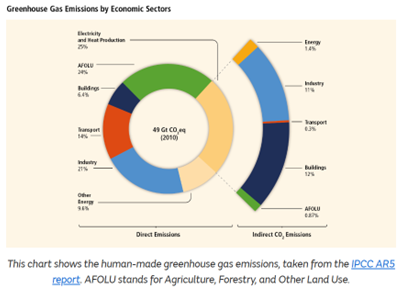
Photo Caption: This chart shows the emissions share between different sectors.
The below graph illustrates the rise in global temperatures. By 2018, the 20 hottest years ever recorded worldwide occurred within the last 22 years. According to the Met Office's 2021 State of the UK Climate report, the ten warmest years in the UK since 1884 have all taken place since 2002.
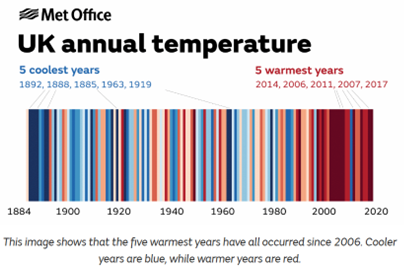
Photo Caption: This image illustrates the changing temperature over the last century.
The impacts of climate change are already being felt through more extreme storms, heatwaves, rising sea levels, and damage to natural habitats. It also places pressure on resources like water and agriculture, affecting food prices and infrastructure. Even if we reduce GHG emissions now, the effects of past emissions will persist for years. Acting now is crucial to prevent further damage and reduce the severity of future impacts.
In 2019, East Devon District Council declared a climate emergency, committing to becoming carbon neutral by 2040. This includes reducing emissions through energy-efficient measures and renewable energy, as well as adapting our systems to protect communities and the environment, such as using permeable surfaces to reduce flood risks.
Addressing climate change is vital to safeguarding our future and requires urgent action.
For more information, check out the BBC simple guide on 'What is climate change?’ or a more detailed guide provided by the Met Office.